
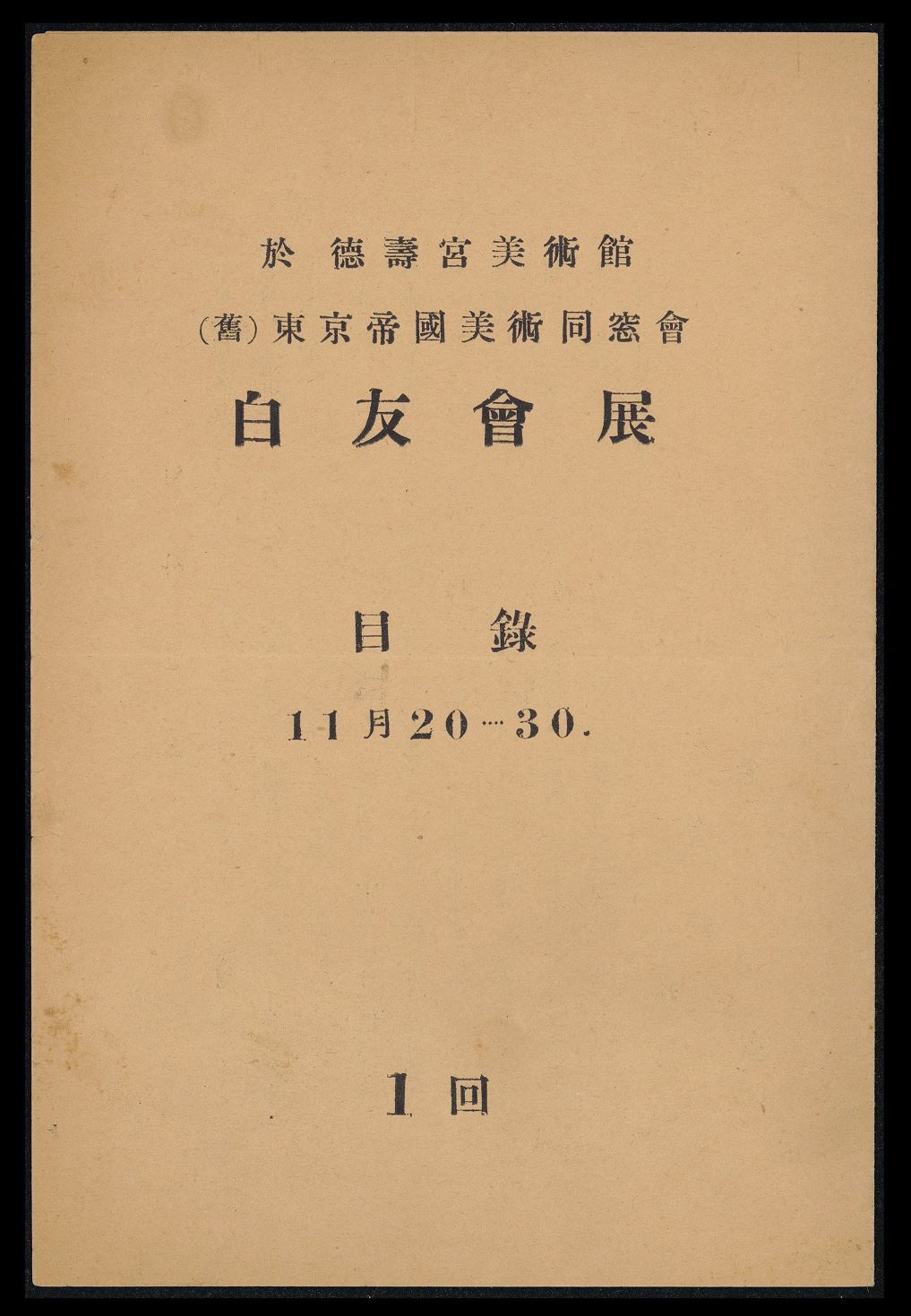
The First Baeku Association Exhibition, Leaflet, 1955, MMCA Art Research Center Collection
Baeku Association


* Source: MMCA
Related
-
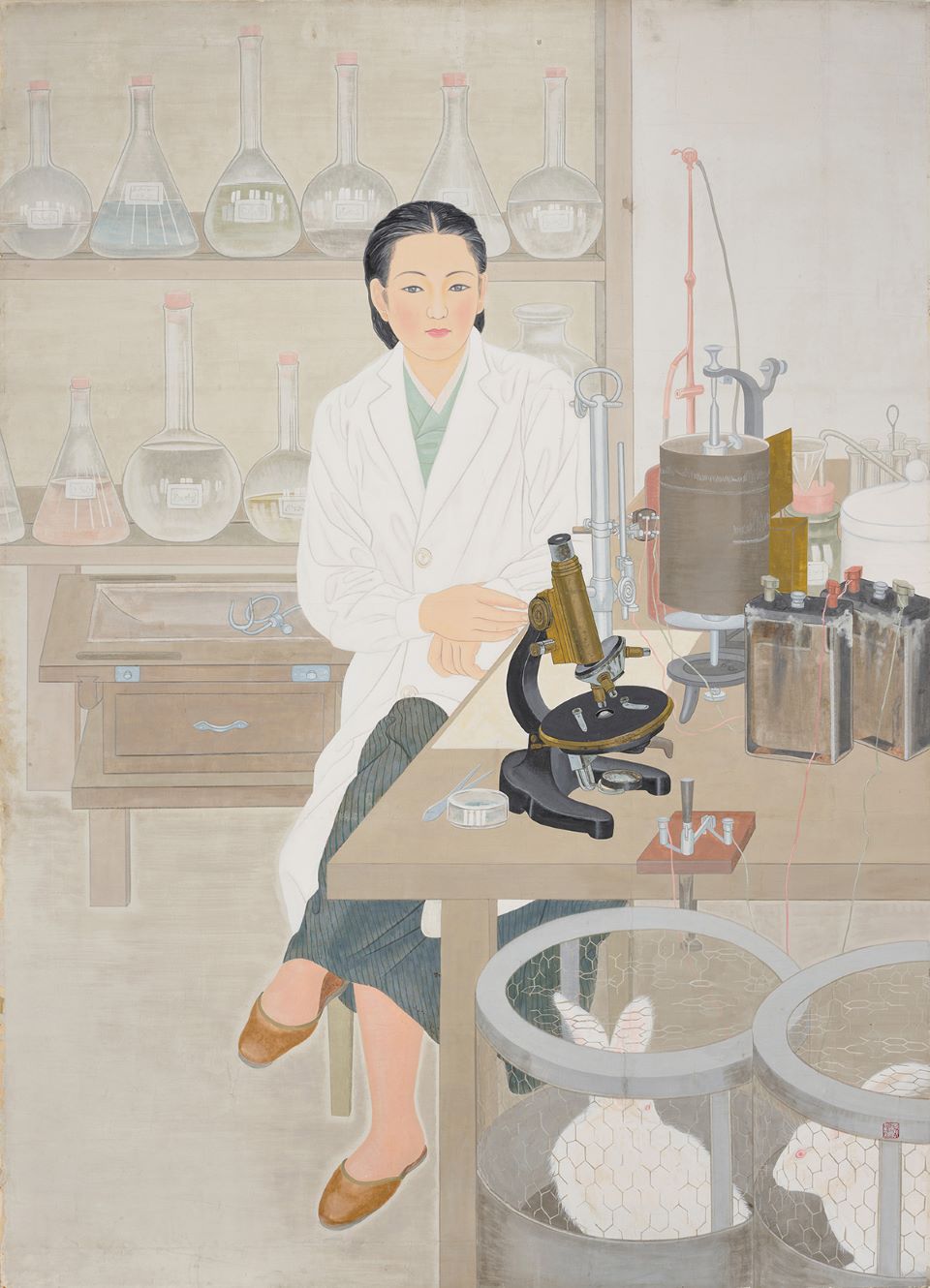
Lee Yootae
Lee Yootae (1916-1999, pen name Hyeoncho) learned painting from Kim Eunho in 1935 and participated in Husohoe, a group of Kim Eunho’s trainees, in 1936. He moved to Japan in 1938 to study at Kawasaki Ryuich’s art studio at the Imperial Academy of Fine Arts. He showed his potential by winning the government's general award and the Changdeokgung Palace award at the Joseon Art Exhibition [Joseon misul jeollamhoe] in 1943 and 1944, and then worked as a professor at Ewha Womans University from 1947 to 1979. He played a pivotal role in modern Korean painting Academism by holding various positions, such as a Noteworthy Artist at the 1955 National Art Exhibition, Invited Author, judge, and a member of the National Academy of Arts. He was also a main member of Paek Yang Painting Association from 1957 to 1975. After his studies in Japan, he excelled at female figure paintings by combining the realism of Western paintings, a classical academicist Estern painting technique, and the bright colors together. He was specially known for his female figures described, which were described as idealised representations of the modern era. After independence, he created grand landscape paintings depicting the natural beauty of Korea. By doing so, he demonstrated the value of a traditional approach to landscape painting using real scenery.
-
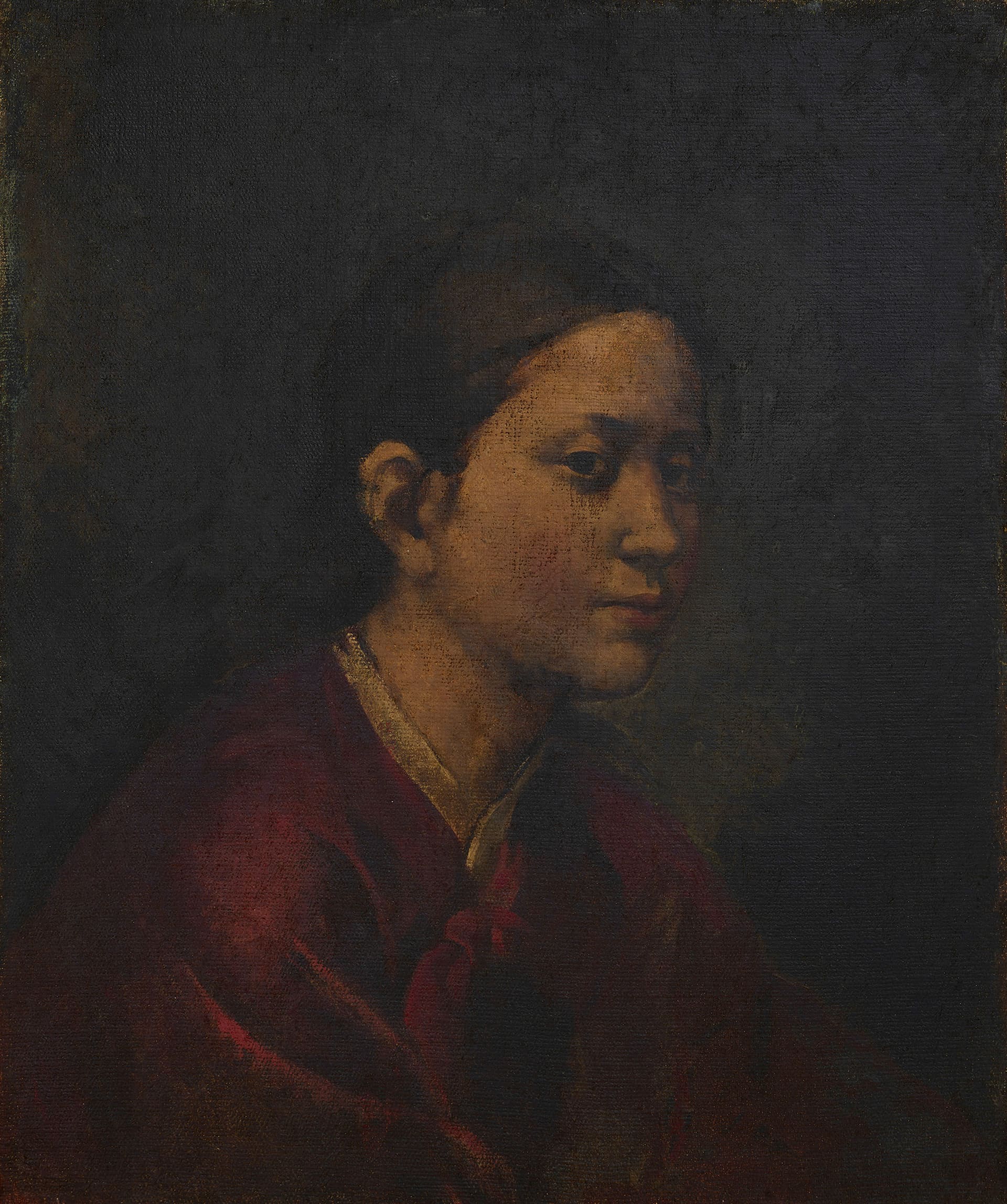
Lee Qoede
Lee Qoede (1913-1965) was born in Chilgok, Gyeongsangnam-do as the second son of a wealthy landowner family. He was strongly influenced and supported by his brother, leftist intellectual Lee Yeoseong and specialized in the history of art, clothing, and folklore. He graduated from Soochang Elementary School in Daegu in 1928, Whimoon High School in 1933, and the Department of Western Painting at the Teikoku Art School in Japan. His works, such as Fate (1938), Night Picnic (1939), and Swing (1940), were selected for the Nikakai Exhibition. After his return to Korea, he founded and led the New Artists Association and its exhibitions from 1941 to 1944. After independence, he was appointed as a committee member of the painting division at the Korean Plastic Arts Federation [Joseon johyeong yesul dongmaeng] and a chairman of the Western Painting division at the Korean Art Alliance [Joseon misul dongmaeng]. After visiting North Korea, he became a centrist and founded the Korean Art and Culture Association [Joseon misul munhwa hyeophoe]. where he was appointed as a chair. In 1948, he joined the National Guidance League. While working as a lecturer at Hongik University, the Korean war broke out, after then and he contributed to the Korean Art Alliance. He escaped Seoul just prior to the 1950 September operation to retake the city but was arrested by the South Korean army and held in prison camps in Busan and Geoje. In an exchange of prisoners, he opted to go to North Korea. In 1988, when the ban on artists who defected to North Korea was lifted, his family revealed his works, such as the People series, A Beggar, and Fate, to the public. He then was re-evaluated as one of the most significant artists in Korean modern art history.
Timelines

Sign Up for Email Updates